
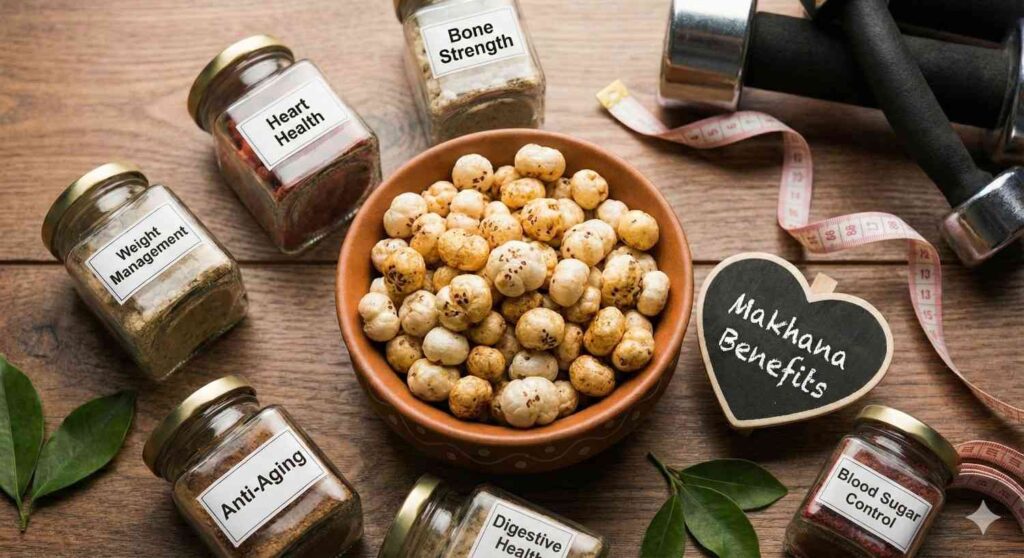
 Top Health Benefits of Makhana
 Rich in Essential Nutrients
Makhana is a nutrient-dense food that supports daily nutritional needs.
Nutritional value per 1 cup (32 g) of dried makhana:
- Calories: 106
- Protein: 4.93 g
- Calcium: 52.2 mg
- Magnesium: 67.2 mg
- Phosphorus: 200 mg
- Potassium: 438 mg
- Iron: 1.13 mg
It provides healthy carbohydrates along with vital minerals like calcium, magnesium, iron, and phosphorus.
- Calcium supports bone health, helps regulate blood pressure, and may reduce cholesterol levels.
- Magnesium plays a key role in muscle function, nerve signaling, protein synthesis, and metabolic processes.
 Rich in Antioxidants
Makhana contains antioxidants such as epicatechin, which help protect the body from oxidative stress.
Antioxidants may also help reduce inflammation and support conditions related to:
- Rheumatoid arthritis
- Gout
- Psoriasis
- Inflammatory bowel disease (IBD)
 May Help Stabilize Blood Sugar Levels
Some animal studies suggest that makhana may support blood sugar regulation.
- A 2023 study in mice found improved blood sugar control and kidney health after administering germinated makhana seeds.
- A 2019 animal study observed improved insulin and blood sugar levels using a compound extracted from makhana.
 These studies used concentrated extracts. More human-based research is needed to confirm these effects in everyday consumption.
 May Support Weight Management
Makhana is naturally high in protein and fiber, two nutrients that promote satiety and appetite control.
- Protein helps reduce hunger and food cravings
- Fiber slows digestion, helping you feel full longer and supporting digestive health
Research suggests that higher fiber intake may also be linked to:
- Weight management
- Reduced risk of heart disease
- Lower risk of type 2 diabetes
 May Support Skin Health & Healthy Aging
Makhana contains amino acids that may support skin elasticity and hydration, including:
- Glutamine
- Cystine
- Arginine
- Methionine
- Glutamine helps produce proline, a building block of collagen
- Methionine and arginine support creatine production, which may help reduce wrinkles when applied topically
- Antioxidants help slow visible signs of aging
More research is needed, but early findings suggest promising skin-supporting benefits.
 May Support Heart Health
Animal studies indicate that makhana may positively influence heart health markers.
- A 2019 study showed reduced cholesterol and triglyceride levels in rats with fatty liver disease
- Another study found improved cholesterol levels in diabetic mice
While human studies are still limited, these findings suggest potential cardiovascular benefits when makhana is included as part of a balanced diet.
 How to Enjoy Makhana
Makhana has a mild, neutral taste that pairs well with many dishes.
Popular ways to consume makhana:
- Dry roasted with spices like sea salt, turmeric, chili powder, or black pepper
- Added to curries and savory dishes
- Mixed into snacks like bhel puri
- Used in desserts such as kheer (Indian rice pudding)
It’s a versatile, nutritious ingredient suitable for both sweet and savory recipes.
 A Simple, Smart Superfood
Makhana is a wholesome snack choice that combines nutrition, versatility, and traditional wisdom—making it ideal for modern, health-conscious lifestyles.